
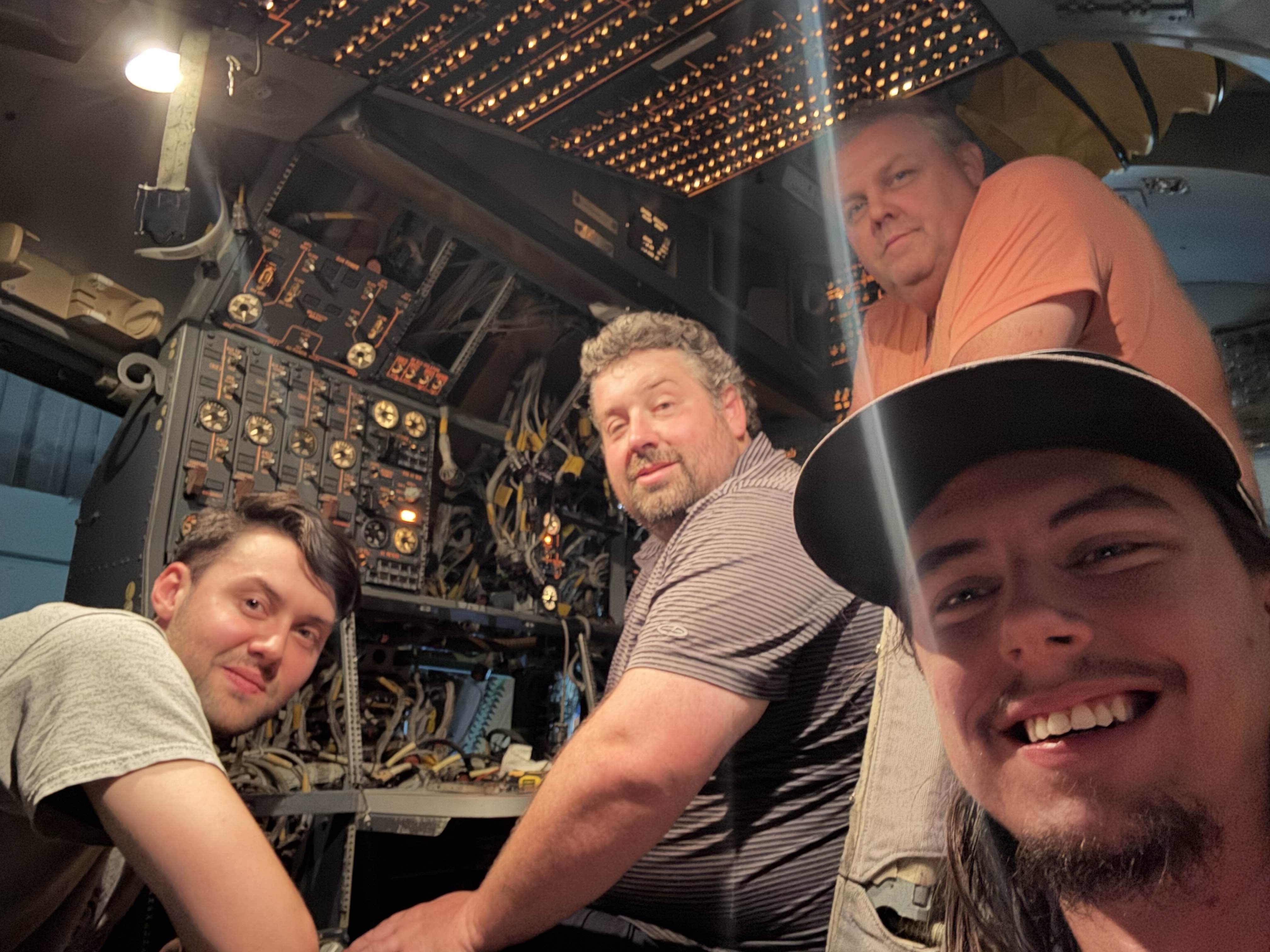
How far would you go for realism?
Flight simmers know the answer is “embarrassingly far.” Every avgeek has one aircraft they’re phenomenologically attached to — the feel of a switch, the sound of a PTU, the smell of coffee-stained seats. We’re the simmers crazy enough to chase that feeling all the way down to the airframe itself.
We’re the Jurassic Jets Team — a group of avgeeks who got crazy enough to think we could turn a real 747 cockpit into a flight simulator and fly it around the world. The sim lives in a unit in San Jose, California, just down the road from SJC. Most of us are based across California, with a few who commute in from Seattle to spend weekends on the project. Backgrounds range across electrical engineering, aviation, construction and fabrication — whatever it takes to bring a Queen of the Skies back to life.
How we got hereFrom a wooden cockpit to the real thing
The project started in 2024 with a wooden 747 cockpit we built in a day in the garage of an Airbnb — the “Cedar Clipper” — and flew for WorldFlight 2024 under a Pan Am callsign. It was a proof of concept, and we learned a lot. The biggest lesson: we wanted to go further.
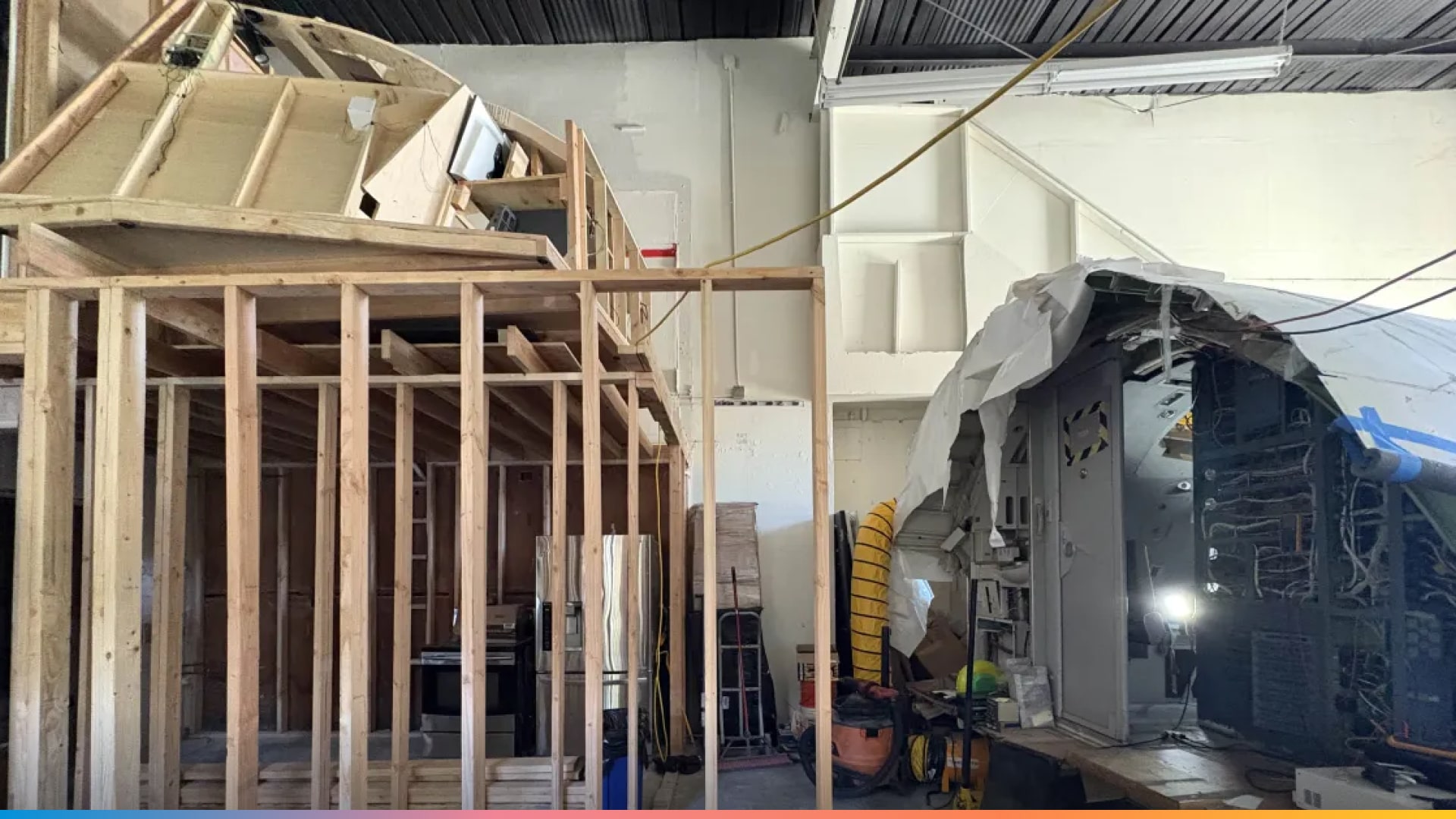
We chose the second path. By the end of 2024 we’d bought a real 747 cockpit section, and a few months later it was on its way from a scrapyard in St. Athan, Wales, to its new home in San Jose.
The aircraftThe Queen of the Skies
The Boeing 747, often nicknamed the “Queen of the Skies,” revolutionised air travel when it first took flight in 1969. Designed as the world’s first widebody jumbo jet, it offered unprecedented passenger capacity and range — dramatically lowering the cost per seat-mile and opening the door to affordable long-haul travel for millions. Over five decades the 747 family became an icon — luxurious passenger transport, freighter, government aircraft, even Space Shuttle carrier. Its distinctive humpbacked silhouette remains one of the most recognisable shapes in the sky.
The 747 Classic isn’t just the Queen — she’s the original Queen. No glass displays, no FMS, no advanced systems. Three-person crew. Every panel analog, every input mechanical. We picked her precisely because nobody else flies a Classic for WorldFlight, and because the depth of old-school jet-age systems makes for both better flying and better storytelling on stream.
And there is one more reason this exact airframe is special to us: she actually landed at Kai Tak in her JAL years — the legendary Hong Kong approach with the checkerboard-hill turn onto runway 13. Pulling the throttles back in our cockpit, knowing the very same flight deck wrestled that approach for real decades ago — that is about as immersive as flight simming gets.

MSN 23640
Our cockpit was delivered new to Japan Airlines in March 1987 as JA8179. She spent her early years crossing the Pacific in JAL’s iconic Landor livery, carrying thousands of passengers between Tokyo, San Francisco, London and beyond. When her time with the flag carrier ended she was sold to Wells Fargo Bank Northwest and found a new chapter in Russia with Transaero, re-registered as VP-BGY. Even as newer, more efficient jets started to dominate the skies, this veteran 747 soldiered on into the 2010s.
Nothing lasts forever. VP-BGY was placed in storage at Bruntingthorpe Airfield, UK in 2012 — a former RAF base that’s since played host to TV studios, restoration groups, and historic aircraft like the VC10 and TriStar. She sat parked behind ground litter for a decade before finally being sent for breaking in 2022, with parts sold to a scrapyard in St. Athan. The cockpit was listed on eBay in 2024. After carefully comparing candidates both domestic and abroad, we brought her home.
The simulation platformBuilt on Felis
X-Plane has always had an affinity for quirky and complex aircraft, and on September 17th 2021 critically acclaimed developer Felis released a fantastic, highly detailed simulation of the 747-200. The Felis 747-200 has earned widespread praise as one of the most detailed and faithful recreations of a classic jetliner ever made — meticulously modelled systems, authentic cockpit workflows, period-correct avionics, and flight dynamics that immerse you in the complexity and character of early widebody operations. With some collaboration with the aircraft author himself, our project can use the Felis 747-200 to full effect.
The workThe engineering challenge
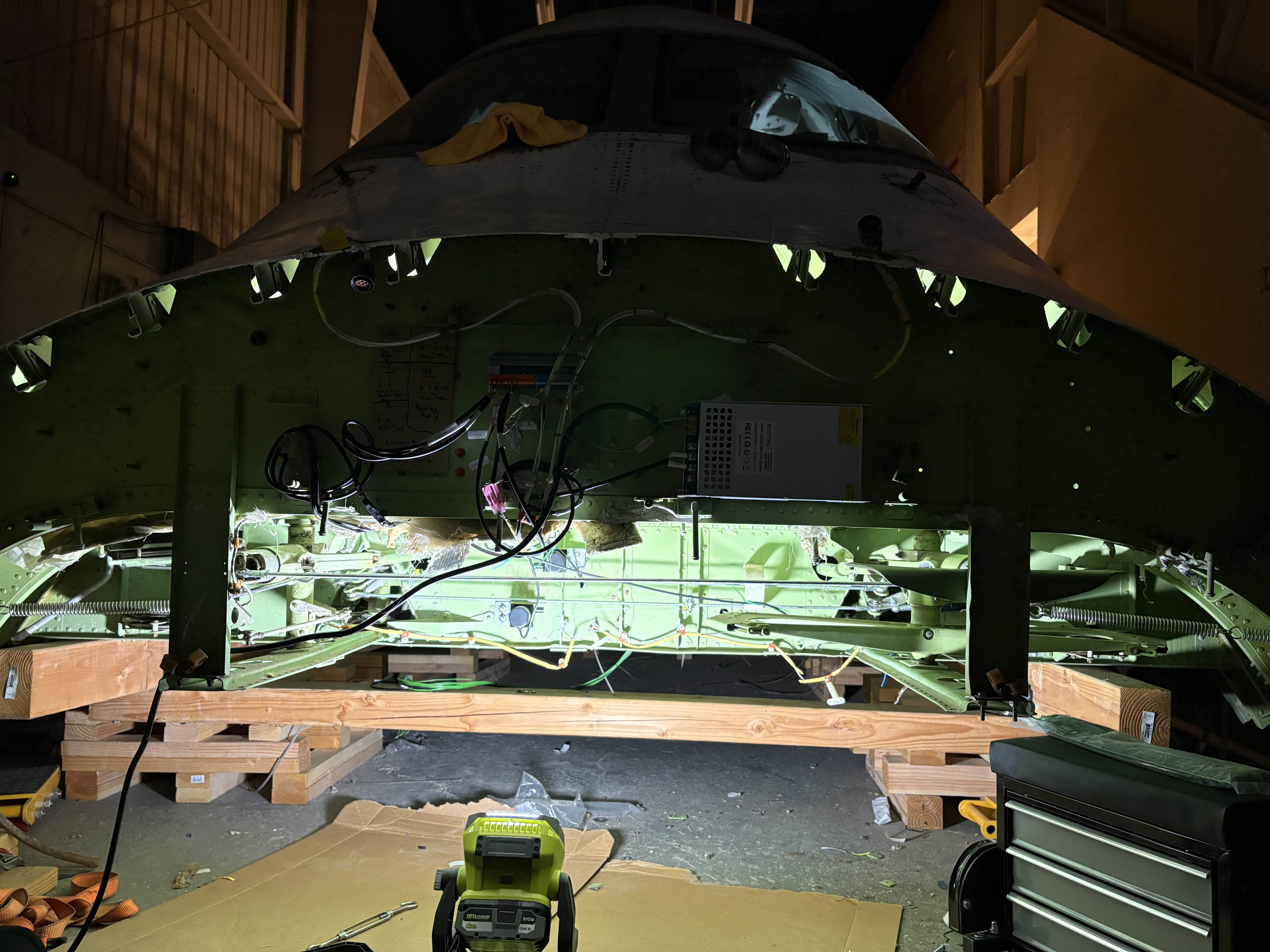
There are no off-the-shelf simulator components for this aircraft. Every interface starts on a breadboard or a Raspberry Pi Pico, gets reverse-engineered against the original wiring, then becomes a custom PCB. Bit by bit the original buttons, dials and relays come back to life — driving X-Plane through datarefs and commands, with the bonus of real fan whirr, real relay clack, and real aural warnings from the original equipment.
WorldFlight
WorldFlight is a unique annual event that brings together flight simulation enthusiasts from around the globe for a week-long virtual circumnavigation of the planet — all in the name of charity. Since its inception in the late 1990s, WorldFlight has raised over $1 million for good causes by combining the realism of full-scale simulator operations with the passion of an international online community. Teams operating high-fidelity cockpit simulators — alongside countless individual pilots — fly scheduled legs over seven days on the VATSIM network, navigating complex flight planning, tight turnarounds, and remote destinations while a global audience watches live.
In 2025 we flew as NWA179, supporting the National Kidney Foundation — a U.S. nonprofit dedicated to preventing kidney disease, improving the lives of people affected by it, and promoting organ donation. We chose NKF because several members of our team have family members directly impacted by kidney issues. Every dollar donated through our stream goes straight to NKF — we don’t take a cent for ourselves.
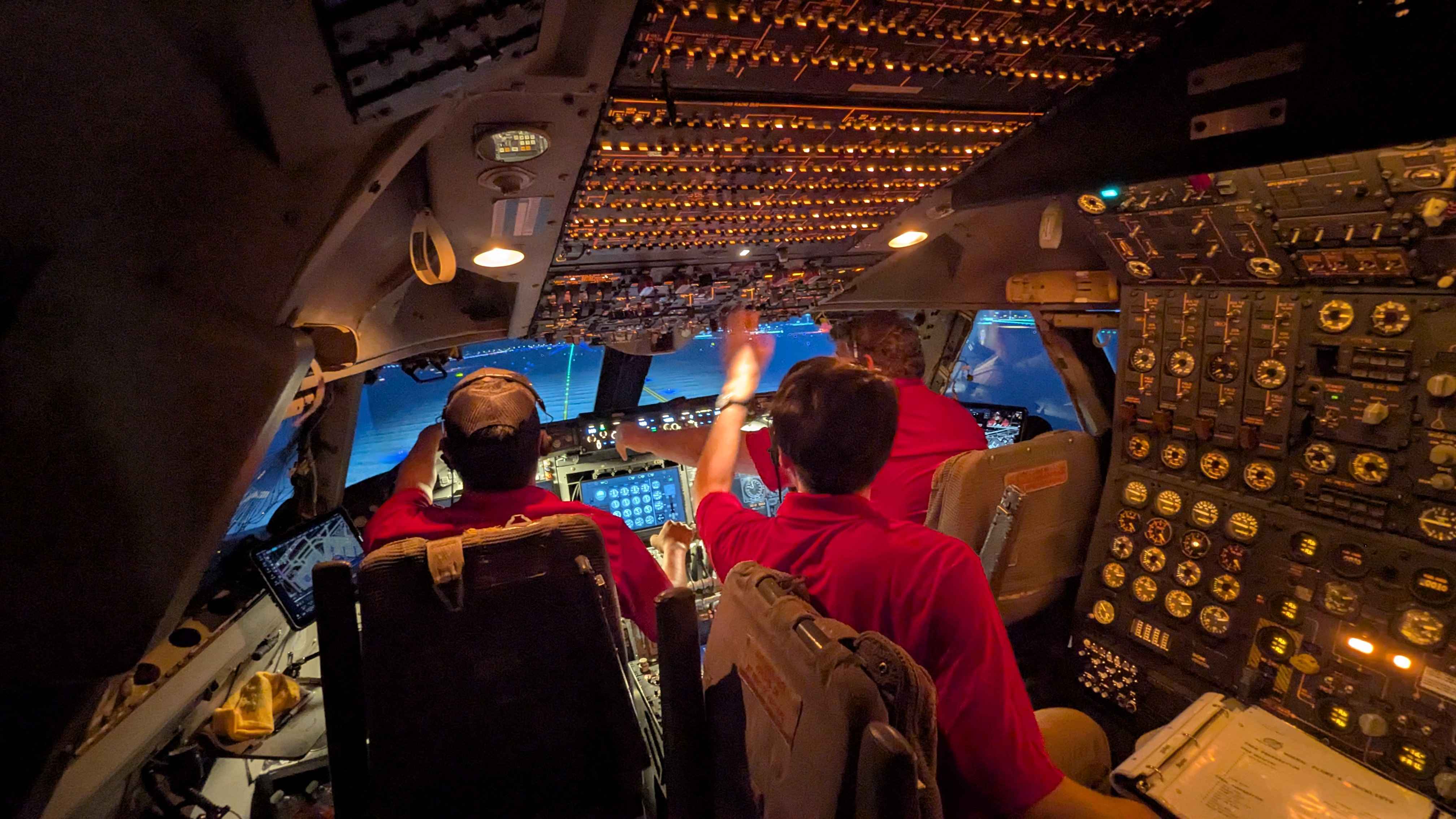
With enough passion, you too could achieve anything
What we love about this project isn’t just how “hardcore” the desire for an authentic experience is. It’s the precedent it sets for everyone else in the community.
Get involved
We’re a small but growing team. If you share the passion for these older planes and have time and interest in being part of the project, the best way to start is through our Discord. Even if you just love the smell of a 1970s flight deck, come hang out. We’re always looking for engineers, builders, pilots, and storytellers who’d rather build something old than buy something new. Prefer email? Drop us a line at contact@jurassicjets.com.
Adapted from “How to build a 747 – A WorldFlight Story” by Dellanie Byron · Laminar Research · October 2025